
Oscillating Blades
Flush cutting, fine trimming and detail work in tight corners demand oscillating multitool blades with precise tooth geometry and compact profiles that reach areas unreachable with standard cutting tools. TOLESA Oscillating Multitool Blades deliver specialized tooth designs for wood, metal, plastic and composite materials, mounting directly to Fein, Makita, Bosch and Milwaukee universal quick-change systems. Shop the official TOLESA store to compare blade lengths, tooth counts and material-specific configurations at the best price with guaranteed multitool compatibility.


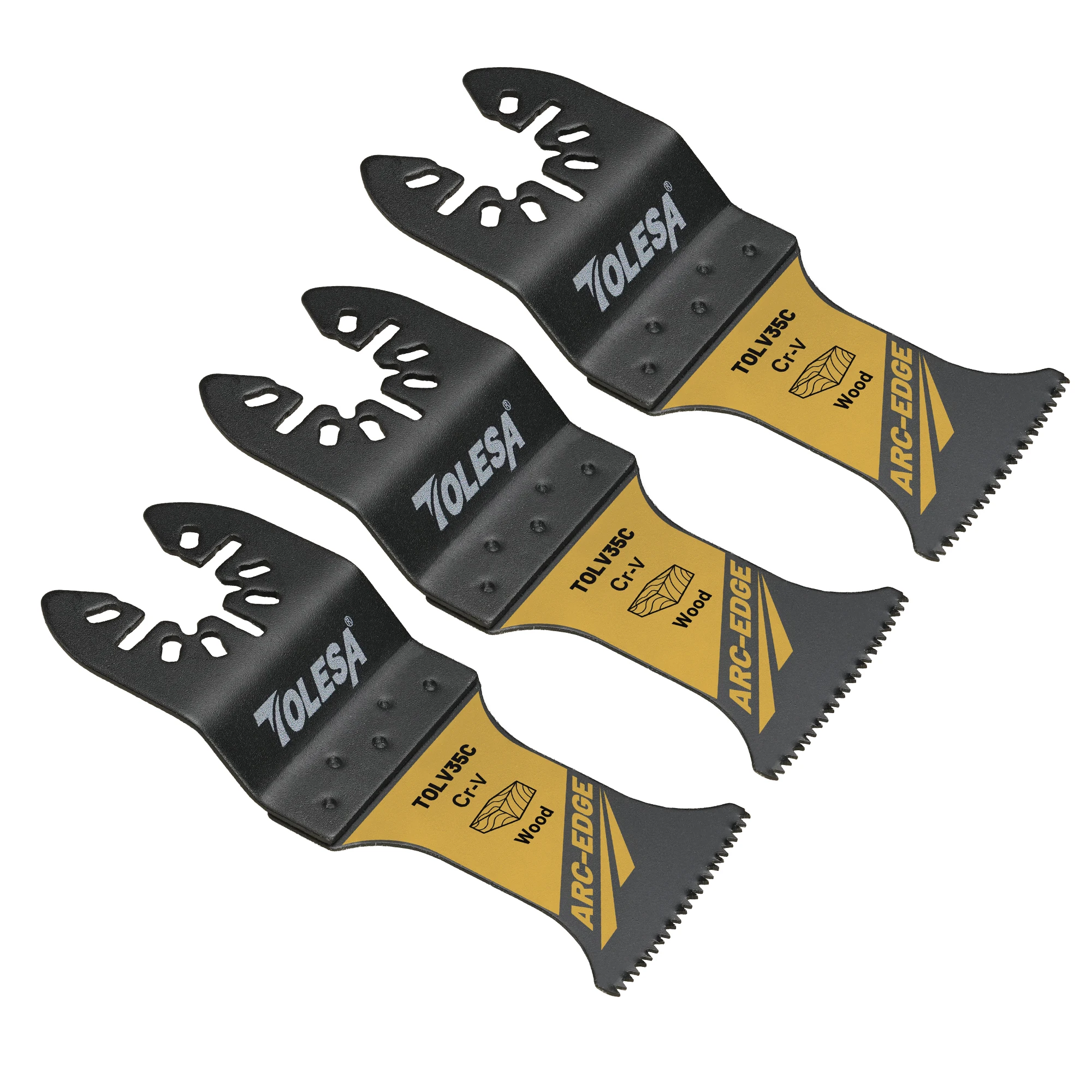
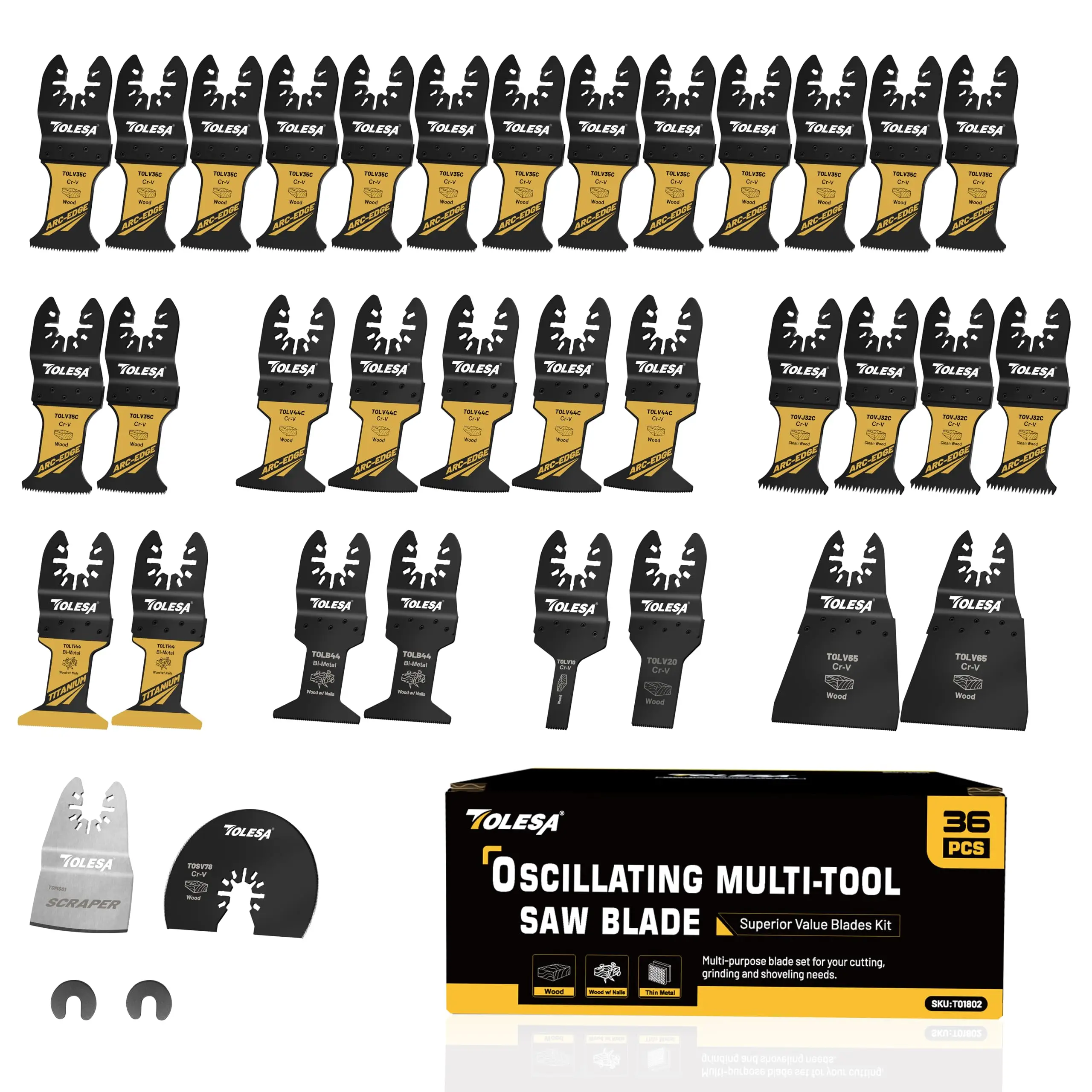

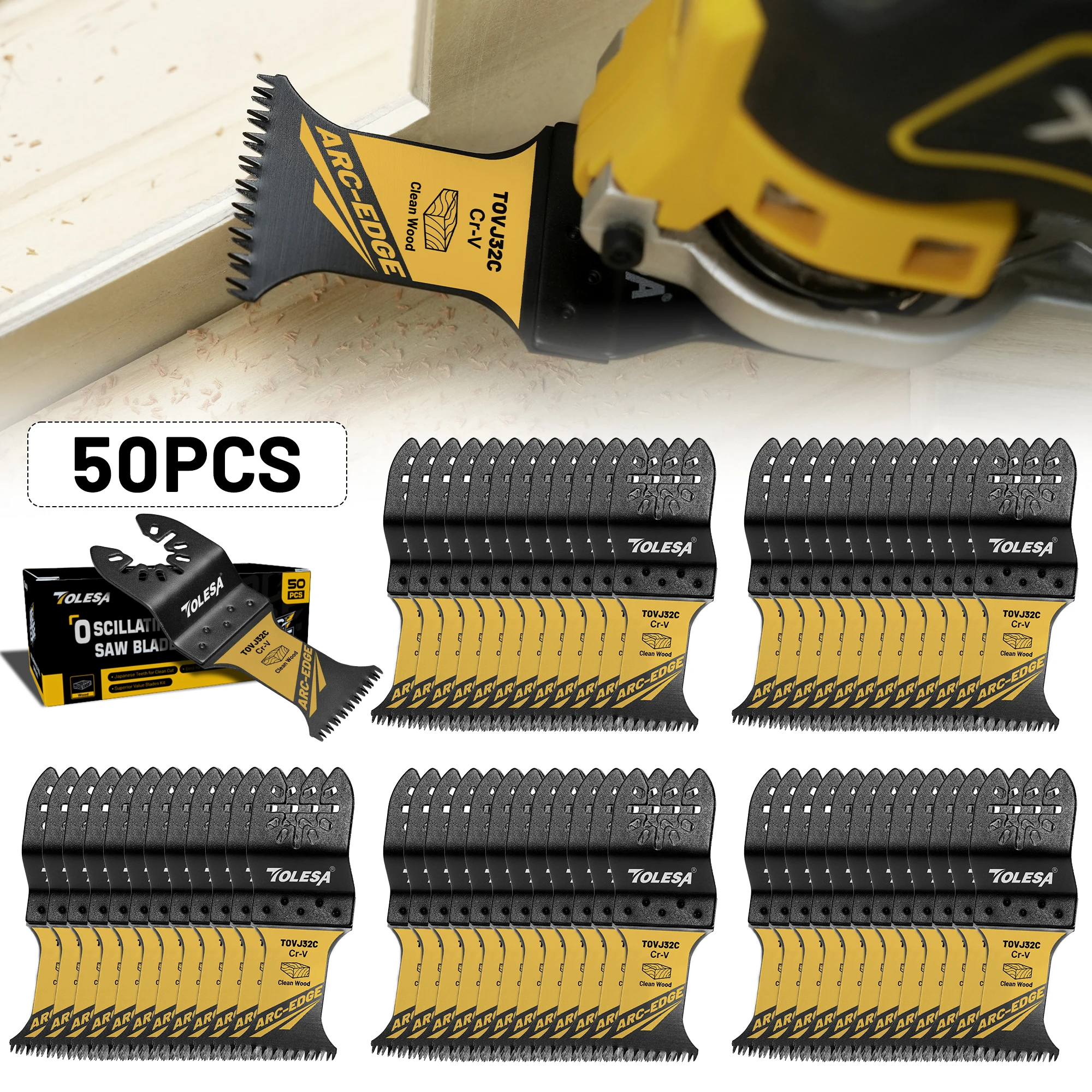
TOLESA Oscillating Multitool Blades for Flush Cutting and Precision Trimming
TOLESA Oscillating Multitool Blades range from two-and-one-half to three and one-half inches in length, engineered for flush cutting, grout removal, plunge cutting through finished walls and detail trimming in confined spaces where reciprocating or circular saws cannot operate safely or effectively. The oscillating motion with amplitudes between one-sixteenth and three-sixteenths inch and frequencies up to twenty thousand cycles per minute enables precise material removal with minimal collateral damage to surrounding surfaces and finished work. Blade profiles include dedicated designs for wood trim work, metal stud cutting, ceramic tile grooving, grout removal between tiles and plastic laminate edge routing, covering the complete range of renovation and restoration applications in professional cabinetry and construction environments. Mounting compatibility spans universal quick-change systems used by Fein MultiMaster, Makita Multi-Tool, Bosch MultiTalent and Milwaukee Oscillating tools, allowing users to switch between blade types and materials in seconds without tool changeover downtime. The blade thickness ranges from point-zero-five to point-one-two inches, controlling cutting precision and kerf width while maintaining adequate stiffness to prevent deflection during precise plunge cuts through drywall, paneling and finished surfaces. Tooth count options from twenty to seventy teeth per inch enable users to match cutting action to material hardness and desired surface finish, from aggressive material removal to smooth edge quality. Order online from the official TOLESA store to access the complete selection of oscillating blades with specifications for each material and application requirement.
Tooth Geometry and Specialized Material Design
Flush-cutting blade profiles employ straight or slightly negative hook angles paired with fine tooth geometry at forty to seventy teeth per inch, allowing precise control and smooth surface finish when trimming hardwood door jambs, cabinet edges and finished moldings without damaging adjacent surfaces. Metal-cutting variants use neutral geometry and appropriate tooth spacing to prevent heat buildup and tooth loading when cutting through steel studs, aluminum trim and copper plumbing during renovation demolition work in occupied spaces. Ceramic tile grout removal blades feature diamond or carbide abrasive particles embedded in a metal matrix rather than traditional teeth, grinding away grout lines and old adhesive without cracking or chipping adjacent tiles during precise plunge cuts. Laminate and plastic cutting employs reverse-tooth geometry that cuts on the downstroke, eliminating chipping and heat-induced melting common with standard forward-cutting profiles when trimming PVC and synthetic materials. Wood-cutting profiles balance cutting speed against finish quality, with moderate tooth counts around forty teeth per inch suiting general trim work and higher-count profiles around sixty teeth per inch reserved for premium hardwoods where maximum surface quality takes priority. Oscillating blade thickness affects deflection resistance during plunge cutting; thinner blades at point-zero-five inches excel at precise detail work and flush cuts where straightness matters, while point-zero-nine to point-one-two-inch profiles provide stability for grout removal and aggressive material removal. TOLESA engineers optimize gullet volume and tooth spacing to manage debris ejection efficiently in oscillating motion, preventing binding that degrades cutting performance and shortens tool life prematurely.
Oscillating Multitool Performance and Precision Advantages
TOLESA Oscillating Multitool Blades maintain cutting precision within point-zero-two inches across the blade length, ensuring straight plunge cuts and flush-cut edges without deviation that compromises joint quality or cosmetic appearance in finished cabinetry. The oscillating cutting action generates minimal vibration compared to rotary cutting tools, allowing operators to work safely in confined spaces near finished surfaces and occupied living areas without disturbing dust or creating excessive noise. Flush-cutting capability enables removal of door jamb bottoms to allow vinyl or ceramic flooring to slide underneath, a common renovation task requiring precision that standard cutting tools cannot deliver in tight spaces. Metal-cutting performance on steel studs and corner bead removes obstacles during wall modification with far less noise and dust than reciprocating saws, protecting finished work and equipment in adjacent rooms during renovation projects. Grout removal between tiles proceeds faster and more precisely with oscillating action than manual hand tools or grinding wheels, particularly when clearing old adhesive before re-tiling kitchens and bathrooms during renovation work. Plunge-cutting through drywall and paneling from the surface without pilot holes proves possible with oscillating blades when flush-cutting cannot work, enabling installation of electrical outlets and fixture penetrations without large circular pilot holes. Shop the official TOLESA store to compare cutting performance specifications and select the blade configuration optimized for your specific flush-cutting, trimming or plunge-cutting application requirement.
Material Selection and Oscillating Blade Recommendations
Hardwood trim and door jamb cutting demands high tooth-count flush-cutting profiles around fifty to seventy teeth per inch, delivering smooth edge quality essential for seamless joint appearance in premium cabinetry and finished interior work. Plywood and composite panel edge trimming benefits from moderate tooth counts around forty teeth per inch that balance cutting speed against chipping resistance when routing edges where the face veneer or laminate surface must remain undamaged. Metal stud cutting through steel framing during wall modification requires dedicated metal-cutting blades with neutral geometry and appropriate tooth spacing, preventing heat buildup and tooth loading that slows progress in production renovation schedules. Ceramic tile grout removal and old adhesive clearing demand diamond or carbide grit profiles rather than traditional teeth, grinding away mineral deposits and hardened mortar that standard metal-cutting teeth cannot approach efficiently. Plastic and PVC material edge routing requires reverse-tooth oscillating blades that eliminate melting and chipping, particularly important when trimming laminate countertops where edge quality directly affects countertop appearance and durability. The blade length you select should exceed the material thickness by at least one-quarter inch, ensuring teeth remain engaged throughout the entire cutting stroke and preventing binding or stalling during oscillating motion. Order your TOLESA Oscillating Multitool Blades online from the official store today to receive the best available price, expert guidance matching blade profiles to your specific flush-cutting and trimming requirements, and fast delivery with comprehensive multitool compatibility assurance.