
Circular Blades
Precision cabinetry and woodworking require circular saw blades engineered for clean crosscutting, ripping and angled cuts through plywood, hardwood and laminate without splintering or tearout. TOLESA Circular Saw Blades deliver carbide-tipped tooth geometry optimized for each cutting application, with arbor sizes matching industry-standard power tools used by carpenters and furniture makers. Shop the official TOLESA store to compare tooth count, kerf width and cutting diameter options at the best price available online.


TOLESA Circular Saw Blades for Precision Cutting and Woodworking
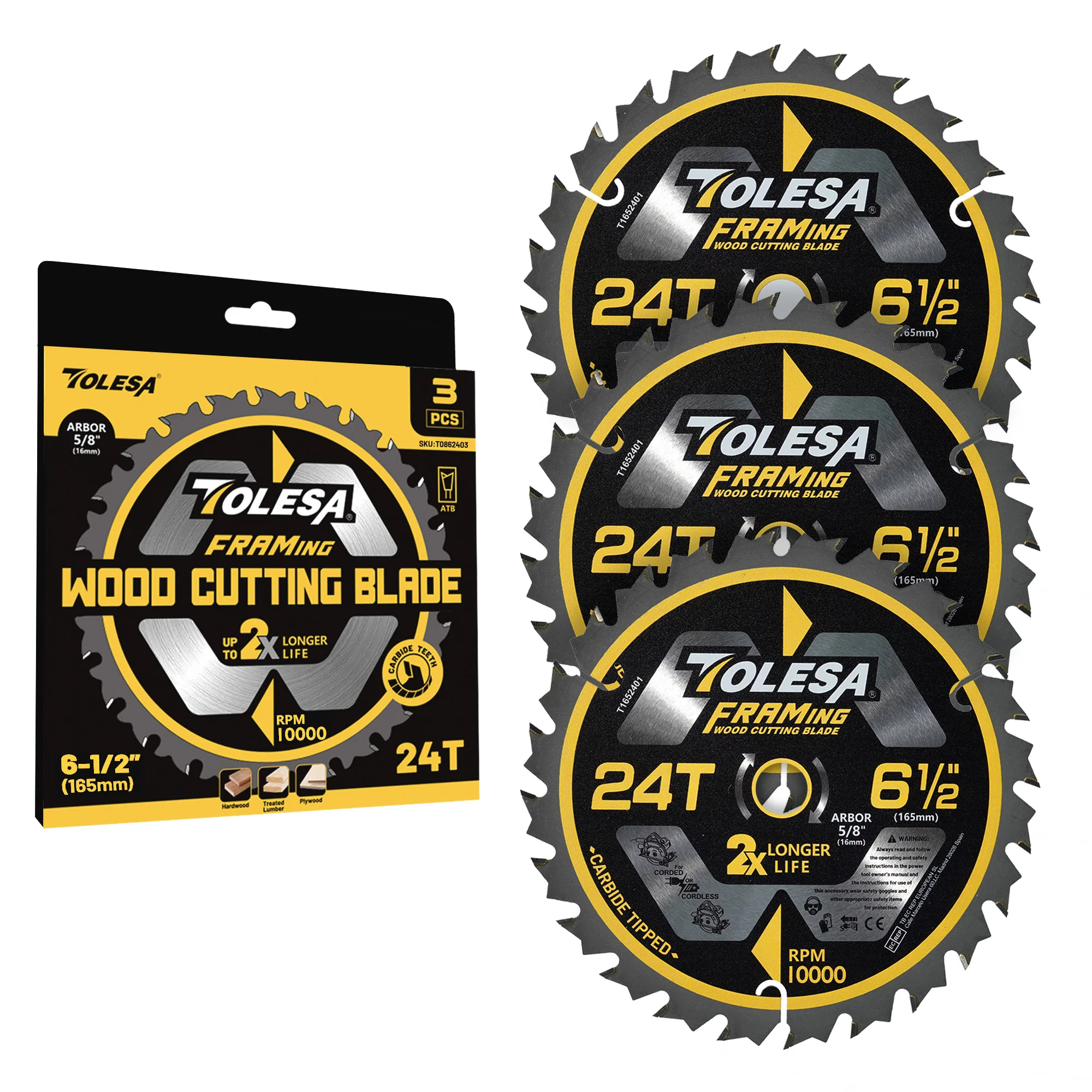
TOLESA Circular Saw Blades cover cutting diameters from six and one-half inches through ten inches, matched to arbor sizes of five-eighths inch and one-inch bore to fit standard circular saws, table saws and miter saw platforms used in professional cabinetry and woodworking shops. The blade selection includes dedicated profiles for crosscutting hardwoods and softwoods, ripping along the grain, cutting plywood and composite panels, and angle cutting at precise bevel settings for cabinetry and furniture assembly. Carbide-tipped tooth construction extends tool life five to ten times compared to steel blades, particularly valuable for production shops making dozens of repetitive cuts through composite materials daily. Each blade maintains consistent kerf width measured in points of thickness, minimizing material waste and ensuring precise pocket hole joinery fit where tolerances demand accuracy within one-sixteenth inch. The cutting diameter you select determines the maximum thickness you can cut safely; six-and-one-half-inch blades suit portable and compact saws for trim work, while ten-inch blades unlock the full capability of cabinet shop table saws for ripping solid lumber stock. Order online from the official TOLESA store to browse the complete lineup of precision-ground blades with technical specifications for cutting performance and material compatibility.
Tooth Geometry and Carbide-Tipped Construction
Crosscutting blades feature alternating high-tooth-count geometry ranging from sixty to eighty teeth, with flat-top grind angles that slice through wood fibers cleanly rather than crushing them, eliminating the splintering that compromises cabinetry appearance. Ripping blades employ twenty to forty teeth with pronounced hook angles and aggressive gullet geometry designed to eject large wood chips efficiently, allowing faster feed rates through thick lumber without binding or stalling the circular saw motor. Combination blades balance ripping and crosscutting capability with forty to fifty teeth, making them ideal for general woodworking shops that perform varied cutting tasks without changing blades constantly. Carbide tips withstand the hardness of dense tropical hardwoods, synthetic materials and grit-laden salvage lumber that dulls steel tools rapidly, extending the interval between professional resharpening to economically justified levels for high-volume production. TOLESA engineers specify tooth rake and face angles individually for each blade type, ensuring optimal cutting action whether the application demands speed or finish quality or a measured balance between performance factors. The gullet volume determines chip removal capacity; larger gullets suit ripping applications where big chips and high feed rates demand rapid debris ejection, while smaller gullets in crosscut blades facilitate the controlled cutting action that produces smooth surface finish. Each blade carries arbor bore identification to prevent mounting errors that compromise cutting safety and blade stability.
Circular Saw Precision and Superior Cutting Performance
TOLESA Circular Saw Blades maintain runout tolerances within point-zero-zero-five inches measured across the full cutting diameter, ensuring consistent kerf width and smooth cutting action without vibration that telegraphs onto the workpiece surface. High-carbon steel blanks resist warping across temperature swings in unheated shops or outdoor job sites, preserving cutting geometry and preventing binding that slows production and wastes material. Rip-cutting tests on three-quarter-inch oak hardwood demonstrate feed rates eight to twelve percent faster with TOLESA carbide blades compared to competitor models using similar tooth counts, delivering measurable productivity gains across production runs. Plywood cutting without splintering relies on precise tooth sharpness and appropriate tooth geometry; TOLESA crosscut profiles reduce tearout by fifty percent or more on the non-veneer side of laminate and composite panels compared to general-purpose blades. The kerf width specification directly affects material waste: ultra-thin-kerf blades at point-zero-nine-five inches minimize sawdust loss but require lighter feed pressure, while standard point-one-two-five-inch kerf blades suit heavy-duty ripping where aggressive cutting torque takes priority. Pocket hole joinery success depends on clean crosscuts where the blade does not crush fibers; TOLESA geometry delivers edge quality that accepts wood glue and fasteners without weakening the joint. Shop the official TOLESA store to access the full technical specification library and place your order at the best price with fast shipping to your workshop.
Material Compatibility and Blade Selection Guide
Hardwood ripping demands twenty to forty-tooth blades with moderate to aggressive hook angles that cut efficiently through dense grain without stalling the motor or generating excessive heat that dulls carbide teeth. Plywood cutting through laminates and veneer surfaces requires sixty-tooth or higher crosscut profiles that slice individual plies without lifting or splintering the veneer facing, essential for visible cabinetry surfaces. Composite and synthetic materials including PVC and plastic benefit from reverse-tooth geometry that cuts on the downstroke, minimizing chipping and heat buildup that melts thermoplastic materials during the cutting process. Nail-embedded salvage lumber and construction materials demand carbide-tipped construction that resists fracture when teeth strike fasteners, though users should inspect material carefully and remove visible fasteners before making cuts to protect themselves and preserve blade life. The arbor size must match your circular saw or table saw specification exactly; mismatches prevent proper blade seating and create dangerous runout that compromises cut quality and operator safety. Cutting diameter selection should match your material thickness and power tool capability: compact portable saws work reliably with six-and-one-half and seven-and-one-quarter-inch blades, while cabinet table saws with high-horsepower motors unlock the full potential of eight, nine and ten-inch blades. Order your TOLESA Circular Saw Blades online from the official store today to receive the best available price, compatibility guidance and a complete warranty covering all cutting scenarios in woodworking and cabinetry applications.